
One contract. One timeline. One organisation answering the phone.
Software, hardware, consumables, civil works, power, connectivity, training and operations — specified, supplied, installed and run under a single contract. When something goes wrong, there is no vendor triangle to referee.
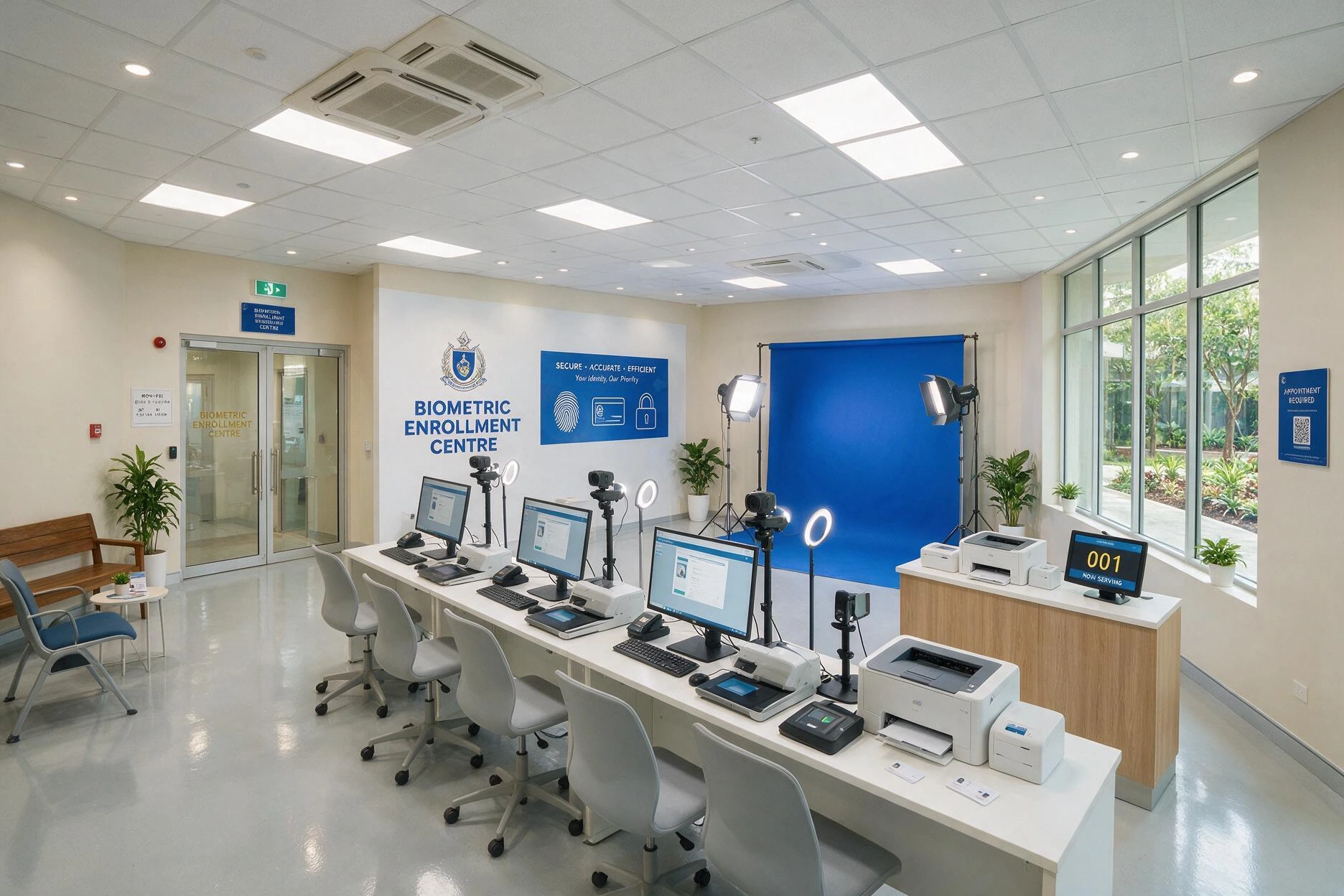
Multi-vendor identity programmes fail at the interfaces. The scanner's SDK doesn't expose the quality score the matcher needs. The card stock delaminates on the personalisation line. The UPS was sized for the workstations but not the printers. The generator fuel contract was never signed.
Each is somebody's fault, and none of them are yours to fix — but all of them are yours to explain to a minister. Turnkey moves that risk onto the contractor's balance sheet, where it belongs.
Design and specification
Solution design, site surveys, capacity modelling, bill of materials, standards conformance plan.
Systems and software
Platform delivery or configuration, integration with existing registries, and the operational tooling your staff will spend their day in.
Hardware supply
Capture devices, workstations, card printers, laminators, servers, network, UPS and generators — qualified as a working set rather than assembled from separate procurements.
Civil works and site readiness
Enrolment centre fit-out, counters, queue management, lighting specified for capture quality, physical security, cabling, power conditioning and cooling.
Logistics and customs
Freight, in-country clearance, bonded storage, last-mile distribution to remote sites, asset tagging on arrival.
Installation and commissioning
Site-by-site installation, calibration, acceptance testing against a signed test script, and a list of outstanding defects closed before sign-off.
Training
Operator, supervisor, administrator and train-the-trainer curricula, in the working language of the site, with competency testing.
Operations and support
Helpdesk, field engineers, spares pool, consumables replenishment, preventive maintenance and SLA-backed response.
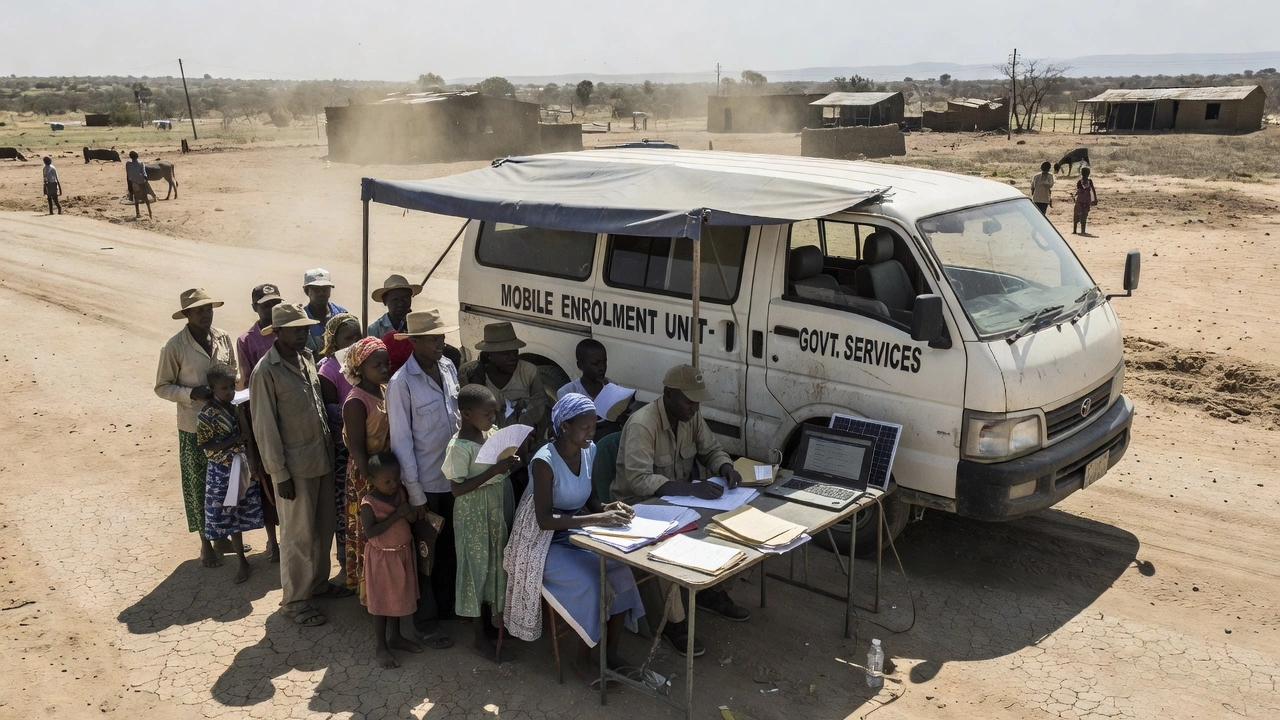
A district registration office with four hours of mains power a day. A mobile unit working a market town for three days. A border post where the nearest engineer is 400 kilometres away. These are normal conditions in our regions, and they change the design, not just the deployment.
Power
Solar and battery-backed configurations, generator interfacing, supplies that keep working through voltage drops, and hardware selected for low draw.
Connectivity
Offline-first enrolment with cryptographically signed local queues, store-and-forward sync, and satellite fallback where fibre doesn't reach.
Environment
Dust and humidity ratings, operating-temperature headroom, sealed optics, and consumables that survive storage in heat.
Support distance
Modular units a trained local operator can swap without tools, and remote diagnostics that work over a narrow link.
- 01
Discovery and baseline
2–4 weeksWhat exists, what it costs to run, what's broken, and what the data looks like underneath.
- 02
Target design
6–12 weeksOperating model, architecture, migration strategy, security architecture, cost model.
- 03
Build and integrate
phasedIncrements of 6–10 weeks, each ending in something demonstrable in a real environment.
- 04
Parallel run
4–12 weeksOld and new both live, output reconciled daily; cutover only when reconciliation is clean.
- 05
Cutover and hypercare
4–8 weeksStaged by region, service or volume. Hypercare is intensive on-site support right after go-live, held until ticket volume flattens.
- 06
Operate and hand back
Managed service with a contracted transition date to your team.
What's the smallest turnkey engagement you'll take?
A single fully-equipped enrolment centre — designed, supplied, installed, commissioned and supported end to end. Below that, our consulting or supply-only options usually fit better than a turnkey contract.
Who owns the system at the end?
You do, in every model. The difference is when — and BOT contracts state the transfer date up front.
What SLA do you offer?
Tiered by site criticality, with a spares pool sized to your uptime target and response times committed in the contract rather than in a brochure.
Can you take over a stalled programme from another vendor?
Yes. It starts with a paid two-week assessment — nobody should quote a recovery without first seeing the state of the assets and the data.
How do you handle customs and clearance?
As part of scope. In our regions, clearance delays are one of the most common causes of slipped commissioning dates, so we plan and carry them rather than leaving them with the client.
Locations, volumes and timeline. We'll come back with an indicative architecture, a bill of materials and a programme shape.