
The systems underneath everything else.
SOC and NOC operations, zero-trust network architecture and sovereign data centre solutions for government-grade resilience.
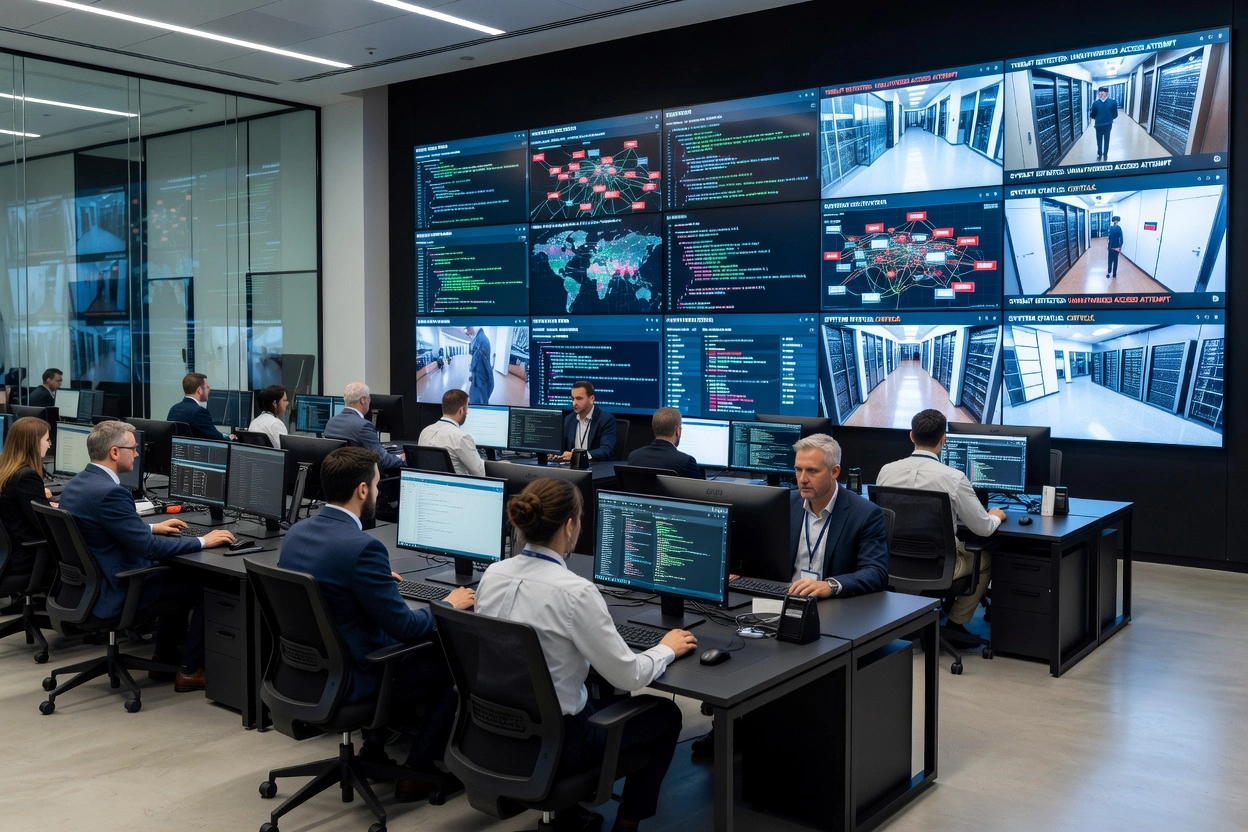
SOC operations
24/7 monitoring, detection engineering, incident response and threat hunting — staffed by us, or transitioned to your own team.
NOC operations
Availability, capacity and performance management for systems that cannot be offline.
Zero-trust architecture
Identity-based access, micro-segmentation, privileged access management and continuous verification.
Sovereign data centres
On-premise and air-gapped deployments, with disaster recovery and defined key custody. Zero foreign cloud dependency where that is the requirement.
Command and control centres
Integrated situational awareness across agencies.
Resilience testing
Red-teaming, tabletop exercises and recovery rehearsal — because an untested recovery plan is a document rather than a capability.
Insider risk treated as a first-class threat
Not an afterthought to perimeter defence. In identity systems specifically, the privileged operator is the attack surface that matters most and the one least often modelled.
Recovery rehearsed, not documented
The question is never whether backups exist. It is whether anyone has restored from them under time pressure, with the people who would actually be on shift.
Handover
A SOC run permanently by an outside party is a dependency, not a capability. The goal is a national team with a transition plan and a date.
- ISO/IEC 27001
- ISO/IEC 27035 (incident management)
- NIST Cybersecurity Framework
- NIST SP 800-207 (zero trust)
- ISO 22301 (business continuity)
- MITRE ATT&CK
A useful starting question: when did your team last restore a production system from backup, and how long did it take?